
INSMA publishes Annual Review of India’s Football Economy 2026, analysing governance and financial trends
April 15, 2026
Kolkata, India
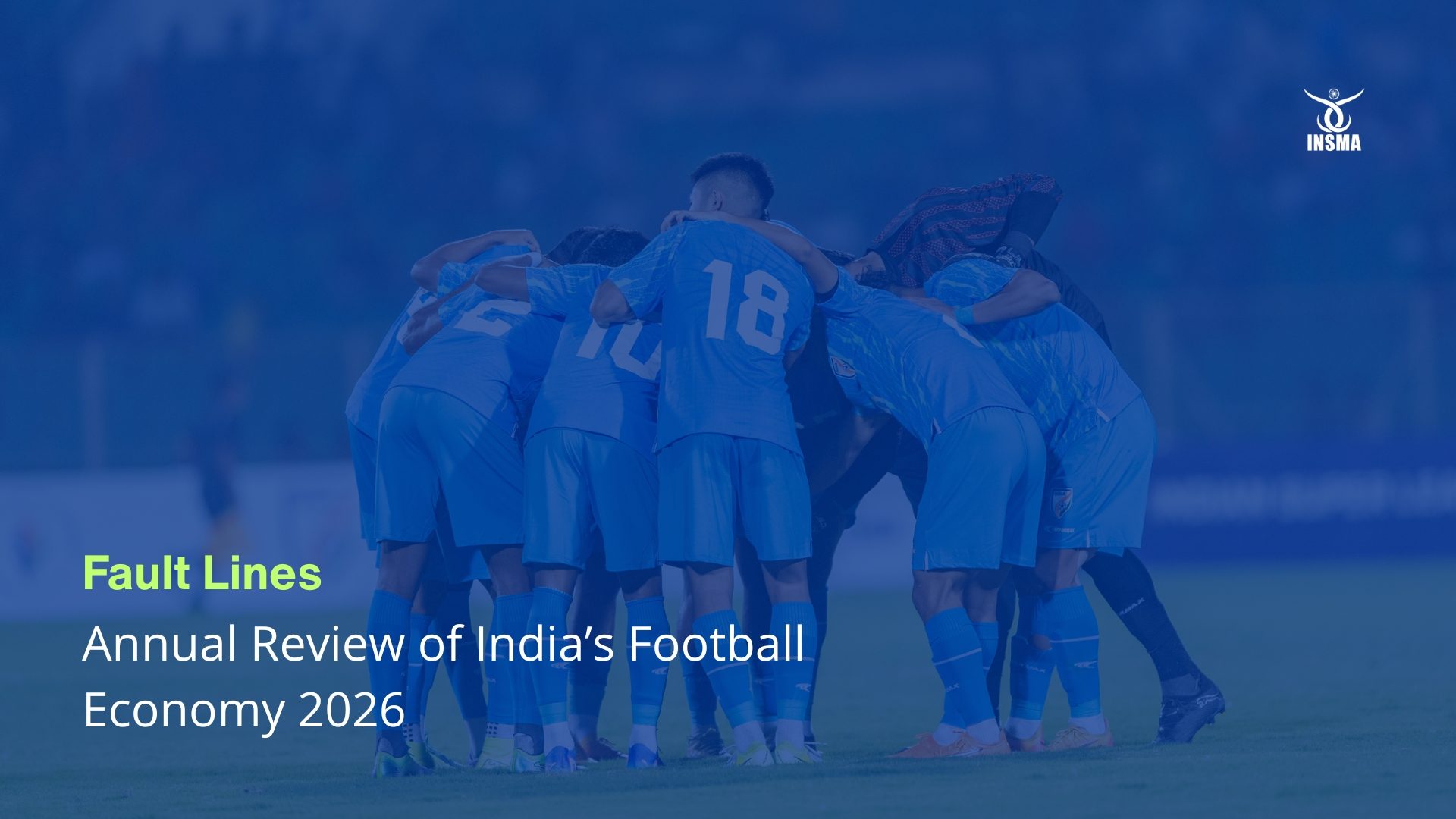
The Indian Sport Management Association has officially released the Annual Review of India’s Football Economy 2026, titled Fault Lines, a comprehensive and data-driven assessment of the financial, governance and structural landscape of professional football in India. The report provides an in-depth analysis of the Indian football ecosystem over an eleven-year period (2014 to 2024/25), with a particular focus on the evolution of the Indian Super League and its transition into a more mature, yet increasingly complex, sporting and commercial environment.
This report marks an important milestone in the evolution of Indian football, reflecting not only the growth of the game but also the increasing complexity and structural maturity of its ecosystem. Over the past decade, the Indian Super League has expanded its commercial footprint and visibility, supported by rising investments and institutional development. However, this growth has been uneven, with revenue expansion often concentrated in centralised streams such as broadcasting and sponsorship, highlighting both progress and underlying fragility in the league’s financial architecture.
Financial analysis reveals a model that has scaled rapidly but remains structurally imbalanced. While average club revenues have increased significantly over time, profitability has remained elusive, with persistent losses across the majority of clubs. Wage expenditure has risen sharply in parallel, creating a widening gap between income and cost structures. This dynamic underscores a broader challenge within the ecosystem: the difficulty of translating top-line growth into long-term financial sustainability.
From a competitive perspective, Indian football has achieved notable parity at the domestic level, with multiple clubs emerging as contenders over the past decade. However, this competitive balance has yet to translate into consistent success in continental competitions, suggesting that while equilibrium has been reached domestically, the overall performance ceiling remains limited. This points to the need for stronger alignment between financial investment, player development, and institutional capability.
Governance remains a central theme throughout the report. The absence of consistent regulatory enforcement and the temporary suspension of key frameworks such as club licensing have created uncertainty at a critical stage of the league’s evolution. Strengthening governance mechanisms, improving financial oversight, and embedding accountability will be essential to ensuring long-term credibility and stability within the system.
At the same time, fan engagement and matchday economics continue to present both opportunities and challenges. Despite strong interest in football as a sport, matchday revenues remain underdeveloped, reflecting structural issues related to stadium infrastructure, scheduling, and monetisation strategies. Building deeper community connections and improving the matchday experience will be key to unlocking more sustainable, locally driven revenue streams.
Dr Sarthak Mondal, President of INSMA, said:
“The release of the Annual Review of India’s Football Economy 2026 comes at a critical juncture for Indian football. While the Indian Super League has achieved notable growth in visibility and commercial scale over the past decade, the findings of this report highlight the need to now focus on structural resilience. Financial sustainability, governance consistency, and long-term strategic planning must become central to the next phase of development. The opportunity ahead lies not just in expanding the game, but in building a more accountable, transparent and sustainable football ecosystem that can compete both domestically and internationally.”
Sandeep Menon, Co-author of the report, said:
“Indian football has spent the last decade chasing growth, but growth without structure is beginning to show its limits. The data makes it clear that the current model is heavily dependent on central revenues and continuous capital infusion, rather than self-sustaining fundamentals. Clubs are spending beyond their means, matchday ecosystems remain underdeveloped, and governance inconsistencies continue to undermine credibility. Unless there is a decisive shift towards financial discipline, stronger regulation, and deeper community engagement, the gap between ambition and reality will only widen.”
Overall, the findings suggest that while the league has established itself as a visible sporting property, its underlying model remains fragile and unresolved. The next phase cannot rely on continued expansion or optimism alone; it demands urgent course correction. Without meaningful consolidation anchored in financial discipline, consistent governance and credible long-term strategy, the gap between commercial ambition and structural reality risks becoming unsustainable.
Access the full report here – Fault Lines: Annual Review of India’s Football Economy 2026
Subscribe Now
©2023. INSMA Sport Managers' Association. All Rights Reserved.